Malvern Panalytical
NS300
The Malvern Panalytical NS300 is a nanoparticle characterization instrument. The Malvern Panalytical NS300 uses Nanoparticle Tracking Analysis to measure nanoparticles in liquid. The Malvern Panalytical NS300 supports size distribution, concentration, and fluorescence measurements.[1][2][3]
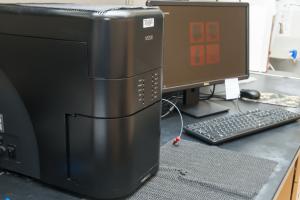
Plate 01Easy-to-use, reproducible platform for nano-particle characterisation - The NS300 from Malvern
AZoNetworkWatch on YouTubePlate 02NanoSight NS300 basic training
Materials Characterisation & Fabrication PlatformWatch on YouTube
What it is
The Malvern Panalytical NS300 is a nanoparticle characterization instrument. The Malvern Panalytical NS300 uses Nanoparticle Tracking Analysis to characterize nanoparticles in liquid and to measure particle size distribution and concentration. The Malvern Panalytical NS300 also supports fluorescence measurements.[1][6][2]
How it works
General reference — not yet source-verifiedNanoparticle tracking instruments observe particles suspended in a liquid and derive size-related information from their motion. Nanoparticle tracking instruments are used as liquid-phase metrology tools for colloids, vesicles, and other nanoscale particle populations. Fluorescence-capable nanoparticle tracking instruments can distinguish labeled subsets within a mixed suspension.
Where it fits in the process flow
General reference — not yet source-verifiedNanoparticle characterization tools are analytical instruments rather than patterning or material removal tools. Nanoparticle characterization tools typically sit in characterization workflows after particle synthesis, dispersion preparation, separation, labeling, or collection steps. Nanoparticle characterization tools can also be used between development steps to compare changes in suspension behavior, aggregation state, or labeling response.
Applications
General reference — not yet source-verifiedNanoparticle tracking instruments are used to examine suspended particle populations in research and process-development work. Nanoparticle tracking instruments are suited to samples where particle-by-particle observation is useful, including mixed populations and fluorescently labeled fractions.
- Particle size distribution and concentration measurement
- Analyzing exosomes and vesicles shed from cells
- Analyzing monodisperse and polydisperse samples
What do the numbers mean?
Power & electrical1
Optics & imaging11
- Nanoparticle tracking analysis range
- 10 nm to 2000 nm, depending on instrument configuration and sample type[3]
Control & software2
Configuration & options7
What does it need to run?
Site utility requirements, footprint, and infrastructure needed to install and operate this tool. Sourced from public records.
- Power input100-240V, 50/60Hz[5]
Where are the manuals?
Generated from public-source data on file. Enter your email to access — nothing is published; details are routed privately.
Not publicly documented
Field notes
No research found yet — worked with this tool? Share what you know.
Frequently asked questions
What measurement method does the NS300 use?
The Malvern Panalytical NS300 uses Nanoparticle Tracking Analysis. The Malvern Panalytical NS300 characterizes nanoparticles in liquid by observing individual particles and measuring diffusion events.[1][6]
What does the NS300 measure?
The Malvern Panalytical NS300 measures particle size distribution and concentration. The Malvern Panalytical NS300 also provides fluorescence mode for differentiation of labeled or naturally fluorescing particles.[1]
Not publicly documented
The following facts about the NS300 are absent from this record as of this revision. First-hand knowledge or a citation closes a gap; every submission is reviewed before publication.
No publicly documented production dates or lifecycle milestones (introduction, end of production, EOL) for the NS300 are on record.
Answerable by: OEM historical records or a trade-press announcement
No publicly documented variants, configuration options, or revision breakpoints of the NS300 are on record.
Answerable by: an OEM product catalog or an engineer who ordered or specified the tool
The control-system platform and OS era of the NS300 are not on record.
Answerable by: an engineer who operated it or OEM installation records
No publicly documented failure modes or field errata for the NS300 are on record.
Answerable by: a field service engineer, process engineer, or maintenance technician
The process node or technology generation of the NS300 is not on record.
Answerable by: an OEM datasheet or a fab qualification report
No research found yet — worked with this tool? Share what you know.
Sources & citations
Sources (6)Every fact above is drawn from these public sources
- [1]cnfusers.cornell.edu — cnfusers.cornell.educnfusers.cornell.edu
- [2]malvernpanalytical.com — malvernpanalytical.commalvernpanalytical.com
- [3]chem.uci.edu — chem.uci.educhem.uci.edu
- [4]malvernpanalytical.commalvernpanalytical.com
- [5]cdn.labwrench.comcdn.labwrench.com
- [6]Equipment Resources | CNF — cnf.cornell.educnf.cornell.edu
Last updated Oct 17, 2026.
Compare with similar tools
View all →The KLA .204 PSL Wafer is an 8-inch NIST-traceable reference wafer compatible with Surfscan 6xy0 and Sp1 particle counters.
KLA .496 PSL Wafer is an 8-inch NIST traceable wafer stated to be capable on Surfscan 6xy0 and SP1.
The KLA .498 PSL Wafer is a NIST traceable reference wafer.
