Toho Technology
FLX-2320-S
Provisional entry — research in progress
This page was generated automatically from cited public sources and hasn't completed the full research pass yet. Every specification shown carries its source; more detail is added as research completes.
The Toho Technology FLX-2320-S measures the change in the radius of curvature of a substrate to determine thin film stress.[1]
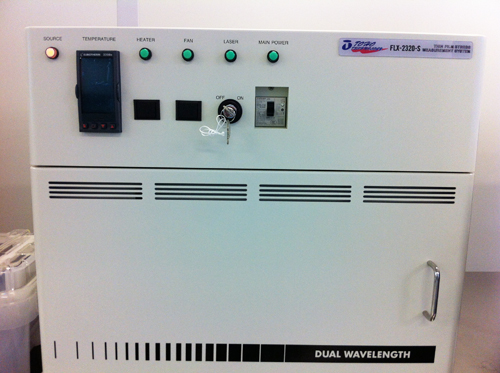
Plate 01KLA-Tencor FLX-2320 Film Stress Measurement System (ID# 4344)
ClassOneEngineeringWatch on YouTube
What it is
The Toho Technology FLX-2320-S is a thin film stress measurement system. The Toho Technology FLX-2320-S measures the change in the radius of curvature of a wafer or substrate caused by the deposition of a stressed thin film. The Toho Technology FLX-2320-S is offered for stress measurements on films and substrates up to 200 mm in diameter. The Toho Technology FLX-2320-S is configured as a tabletop system.[1][2][5][6][3]
How it works
The Toho Technology FLX-2320-S determines stress by measuring substrate curvature before film deposition and again after deposition. The Toho Technology FLX-2320-S uses the difference between the pre-deposition and post-deposition curvature to calculate stress with Stoney’s equation. The Toho Technology FLX-2320-S measures curvature by directing a laser at the wafer surface and detecting the reflected beam with a position-sensitive photodiode. The Toho Technology FLX-2320-S records surface geometry by scanning across the wafer.[1][2]
The Toho Technology FLX-2320-S incorporates dual wavelength technology. The Toho Technology FLX-2320-S can select the wavelength most suitable for a given film, including transparent films such as silicon nitride. The Toho Technology FLX-2320-S provides in-situ stress measurement for thermal stress work from -65°C to 500°C, with heating rates up to 30°C per minute. The Toho Technology FLX-2320-S has optional cooling capability to -65°C and can support controlled atmospheres with nitrogen or argon inert flush capability.[2][6][3]
Where it fits in the process flow
General reference — not yet source-verifiedThin film stress measurement tools are metrology instruments used around deposition and thermal processing steps. Thin film stress measurement tools are typically used after a baseline substrate measurement and then again after film formation to quantify how the added layer changes wafer bow or curvature. Thin film stress measurement helps connect deposition conditions and thermal history to mechanical behavior in the film stack.
Applications
The Toho Technology FLX-2320-S is used to investigate stress-related process problems such as metal and dielectric film cracking, voiding, and lifting formation. The Toho Technology FLX-2320-S is used for stress-temperature correlation work and for characterizing stress relaxation, moisture evolution, and phase changes. The Toho Technology FLX-2320-S includes analysis functions for stress uniformity, wafer topography views, and stress-temperature plotting.[2][6][3]
- Thin-film stress measurement
Why won't it start?
Documented failure modes, common issues, and field considerations.
- The FLX-2320-S uses a blank wafer and patterned wafers will not work.
- The FLX-2320-S requires a reflective wafer surface for the laser measurement.
- The FLX-2320-S measurement is affected by rough wafer surfaces.
What do the numbers mean?
Power & electrical1
- Power requirements
- Measurement module 200-240 VAC, 50/60 Hz, 13 A; computer 115 VAC, 50/60 Hz, 5.4 A[2]
Wafer handling5
- Measurement principle
- Measures the change in the radius of curvature of a wafer or substrate caused by deposition of a stressed thin film.[1]
- Measurement principle
- Measures the change in radius of curvature of substrate before and after film deposition[1]
- Function
- Measures the change in the radius of curvature of a wafer or substrate caused by the deposition of a stressed thin film.[1]
Optics & imaging3
- Compliance
- Class IIIa laser at 670 nm and Class IIIb laser at 780 nm compliant with 21 CFR, Chapter 1, Subchapter J[2]
Performance2
Control & software1
Dimensions & facilities1
- Physical characteristics
- Measurement module height 46 cm, depth 46 cm, width 56 cm, weight 45.5 kg[2]
Configuration & options11
What replaced it?
Related models
- siblingNanospec AFT-6100— Listed in the same optical measurement section of the EPFL CMi equipment portfolio as the Nanospec AFT-6100.source[4]
What does it need to run?
Site utility requirements, footprint, and infrastructure needed to install and operate this tool. Sourced from public records.
- Power requirementsMeasurement module 200-240 VAC, 50/60 Hz, 13 A; computer 115 VAC, 50/60 Hz, 5.4 A[2]
Where are the manuals?
Generated from public-source data on file. Enter your email to access — nothing is published; details are routed privately.
Not publicly documented
Field notes
No research found yet — worked with this tool? Share what you know.
Frequently asked questions
What does the Toho Technology FLX-2320-S measure?
The Toho Technology FLX-2320-S measures the change in the radius of curvature of a wafer or substrate caused by the deposition of a stressed thin film.[1]
Not publicly documented
The following facts about the FLX-2320-S are absent from this record as of this revision. First-hand knowledge or a citation closes a gap; every submission is reviewed before publication.
No publicly documented production dates or lifecycle milestones (introduction, end of production, EOL) for the FLX-2320-S are on record.
Answerable by: OEM historical records or a trade-press announcement
No publicly documented variants, configuration options, or revision breakpoints of the FLX-2320-S are on record.
Answerable by: an OEM product catalog or an engineer who ordered or specified the tool
The control-system platform and OS era of the FLX-2320-S are not on record.
Answerable by: an engineer who operated it or OEM installation records
The process node or technology generation of the FLX-2320-S is not on record.
Answerable by: an OEM datasheet or a fab qualification report
No publicly documented compatible parts, consumables, or accessories for the FLX-2320-S are on record.
Answerable by: an OEM parts catalog or a service engineer
Sources & citations
Sources (6)Every fact above is drawn from these public sources
- [1]epfl.ch — epfl.chepfl.ch
- [2]nanofab.utah.edu — nanofab.utah.edunanofab.utah.edu
- [3]tohotechnology.com — tohotechnology.comtohotechnology.com
- [4]epfl.chepfl.ch
- [5]Toho FLX-2320-S Wavelength Stress Measurement – Research Core Facilities — cores.research.utdallas.educores.research.utdallas.edu
- [6]https://www.tohotechnology.com/wp-content/uploads/2019/09/Toho_FLX2320S_D1.pdf — tohotechnology.comtohotechnology.com
Last updated Oct 20, 2026.
Compare with similar tools
View all →The KLA .204 PSL Wafer is an 8-inch NIST-traceable reference wafer compatible with Surfscan 6xy0 and Sp1 particle counters.
KLA .496 PSL Wafer is an 8-inch NIST traceable wafer stated to be capable on Surfscan 6xy0 and SP1.
The KLA .498 PSL Wafer is a NIST traceable reference wafer.
